

AI at Scale Method for Private Equity
A structured method for portfolio company governance in the Age of AI
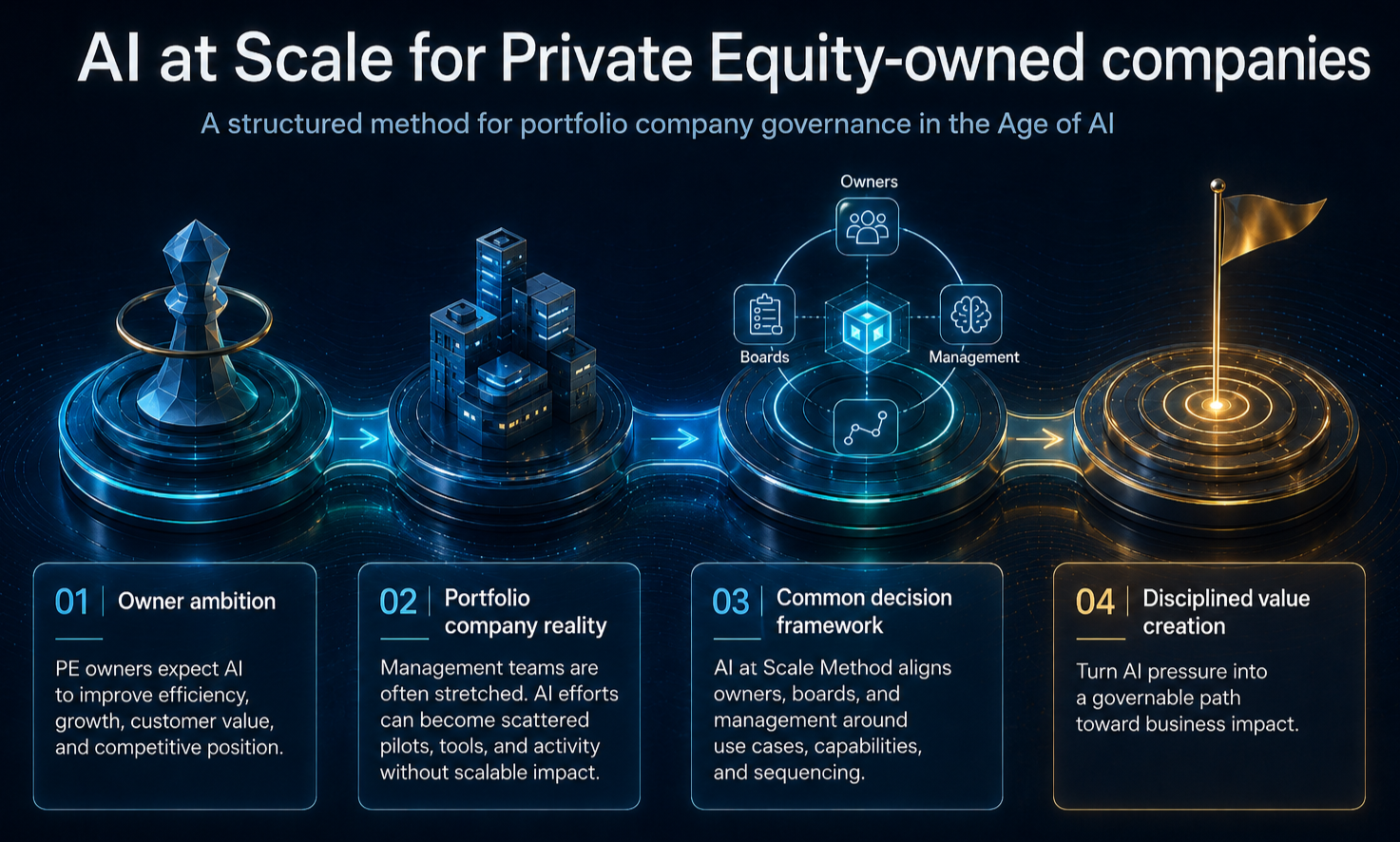
Private Equity owners increasingly expect portfolio companies to use AI to improve operational efficiency, accelerate growth, strengthen customer value, and protect competitive position.
But management teams are often already stretched. Pressure to “do more with AI” can easily produce scattered pilots, tool experimentation, and activity without a clear path to scalable business impact.
AI at Scale Method gives owners, boards, and management teams a common framework for turning AI pressure into disciplined value creation.

From “do more with AI” to a governable agenda
AI is increasingly becoming part of the value-creation agenda for PE-owned companies.
The problem is rarely lack of activity. Portfolio companies may already have AI tools, pilots, vendor initiatives, and individual experiments underway.
The harder questions are:
Where can AI materially improve EBITDA, growth, customer value, or strategic positioning?
Which use cases deserve attention now?
Which capability gaps constrain progress?
What requires preparation before commitment?
What should realistically happen during the current hold period?
How can the board challenge management constructively without creating fragmented AI activity?
The objective is not more AI activity.
The objective is disciplined progress toward business value.
A common decision framework for owners, boards and management
AI at Scale Method is a structured leadership methodology for moving from AI uncertainty to disciplined action.
Applied in a PE context, it creates a shared framework for discussing AI value creation across the ownership and management dialogue.
It helps move the conversation beyond:
Which AI tools should we use?
How many pilots are running?
Are we doing enough with AI?
Toward more consequential questions:
Where does AI create business leverage?
What should we prioritize?
What are we realistically capable of executing?
What needs to be strengthened first?
What should we commit to now — and what should wait?
The result is a stronger basis for AI-related governance, investment decisions, and execution.

AI as a disciplined value-creation agenda
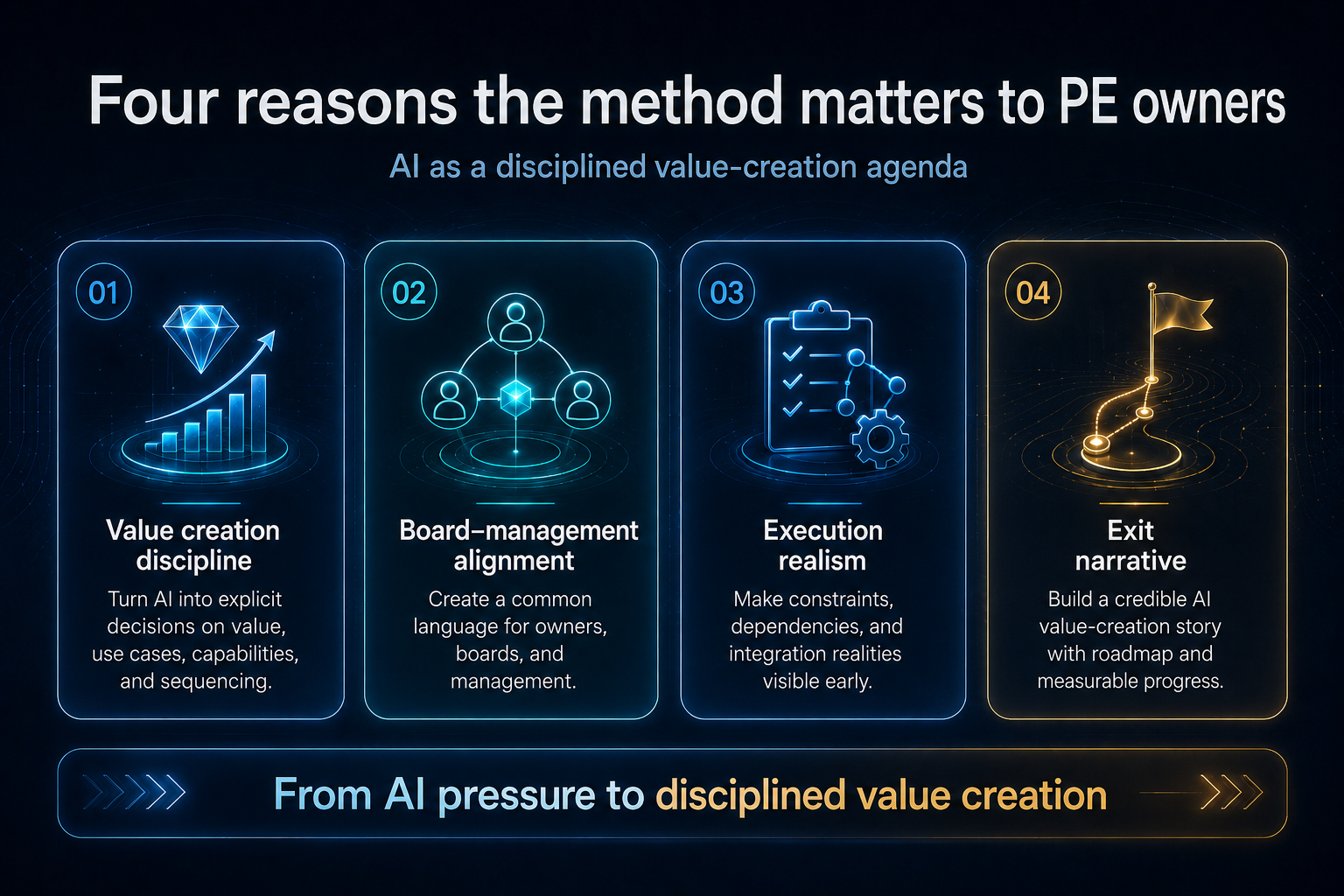
Value creation discipline
Turn AI from a broad strategic theme into explicit decisions about business value, use cases, capabilities, and sequencing.
Board–management alignment
Create a common language for owners, boards, and management teams — enabling constructive challenge without encouraging fragmented activity.
Execution realism
Make constraints, dependencies, integration requirements, and familiar failure patterns visible before major commitments are made.
Exit narrative
Move from “we are experimenting with AI” toward a credible AI value-creation story supported by a roadmap, visible capability build-up, and measurable use case progression.
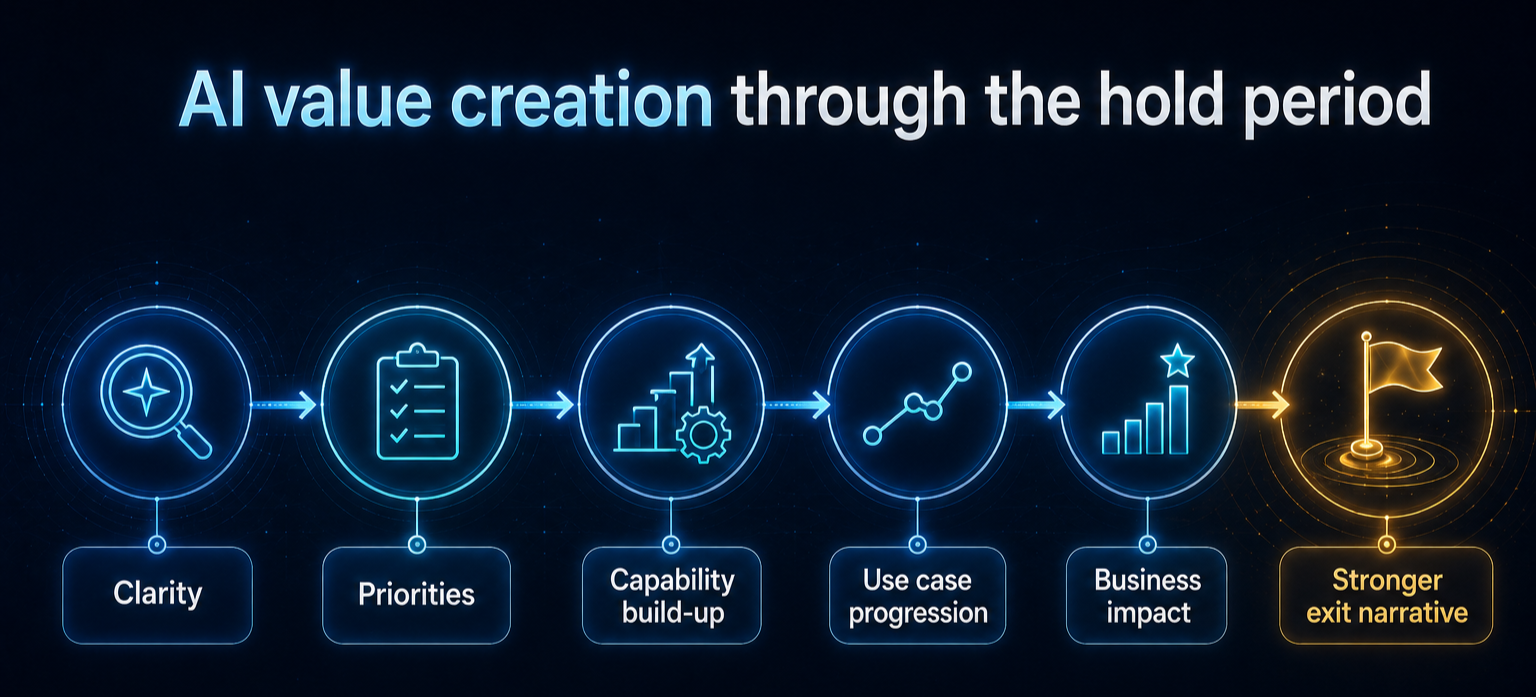
AI value creation through the hold period
AI value creation does not require every portfolio company to launch a large transformation program.
The more useful question is what level of commitment is justified now.
AI at Scale Method helps leadership distinguish between:
What creates value now - Use cases that can generate meaningful results with existing or readily accessible capabilities.
What requires preparation - High-value opportunities that depend on stronger data, processes, technology, operating models, or other capabilities.
What belongs later - More ambitious opportunities whose timing should follow structural readiness rather than optimism.
This creates a more credible way to connect AI ambition with the realities of the hold period.
Start with leadership alignment
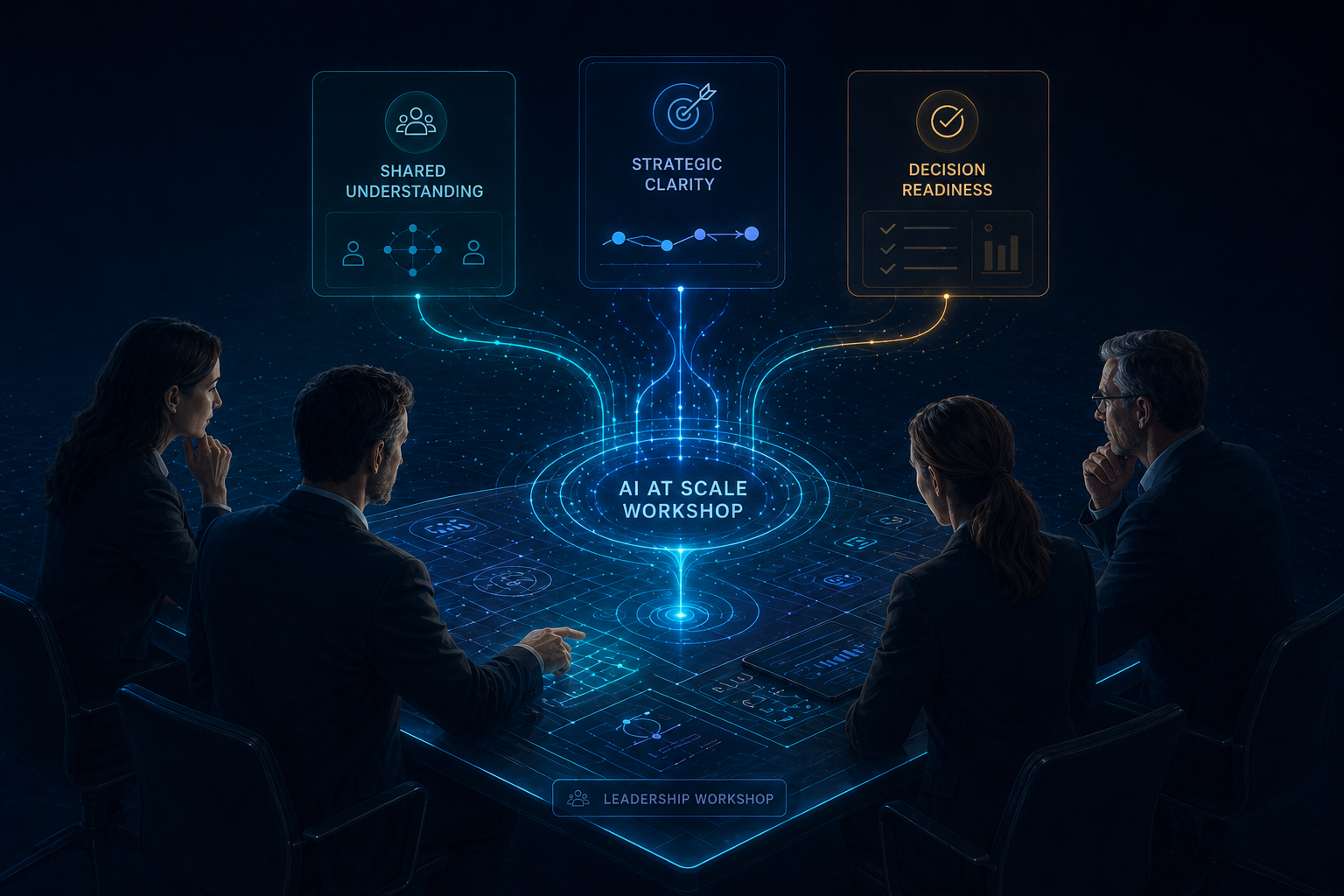
The practical starting point is the AI at Scale Workshop.
It is a structured leadership workshop designed to build shared language, strategic clarity, and decision readiness before larger AI commitments are made.
For a PE-owned company, the Workshop creates a structured forum for aligning perspectives on:
where AI matters most
which opportunities deserve attention
what may constrain progress
what responsible commitment requires
what should happen next
Where deeper work is justified, the broader AI at Scale Method continues from leadership alignment into capability constraints, use case prioritization, integration planning, sequencing, and execution support.
Bring discipline to the AI value-creation agenda
AI creates both opportunity and pressure for PE owners.
The answer is neither to wait nor to push portfolio companies into disconnected AI activity.
A better starting point is a common method for deciding where AI matters, what deserves commitment, what requires preparation, and how progress should be sequenced.
If you are considering how AI should fit into the value-creation agenda of one or several portfolio companies, let’s discuss whether AI at Scale Method could provide a useful framework.